Announcement

Collapse
No announcement yet.

Choy-Li-Fatt and Kungfu Against Other Styles: 20 Questions for Grandmaster

Collapse
X
 
  • Filter
  • Time
  • Show
Clear All
new posts

  • #46
    Dear Markus Sisook

    Thank you for this great thread! Even though I myself cannot contribute much to it nor attend to the amazing Winter Camp 2012 (), I read every entry with avid interest and curiosity, which often leads me into a state of awestruck amazement.

    I actually shuddered when the stunning power of the past masters was, once again, implied. It IS my general reaction, along with a slight bout of melancholia, to any story revolving around our ancestors and past masters.
    During such moments, I not only practice for my health and mental clarity, but also to make Sifu, Sigung and the past masters proud as best as I can! I obviously have a long way to go, but I guess it never hurts to make a continuous effort!

    Ah, bout of melancholia over !

    Thank you again, Sigung, for your unwearying generosity and never-ending inspiration!

    Shaolin greetings
    Fabienne
    Last edited by Fabienne; 5 December 2011, 06:44 PM. Reason: Bad choice of words.


    Comment


    • #47
      Dear all,

      These are surely interesting times. Just looking back at the recent year or so, there have been such broad and also deep additions to the syllabus that Sifu has taught in his courses all over the world.

      The flower set, Asking bridges, Wuzu kungfu, Drunken immortals, Wing choon and more. And as those present at the Winter Camp back in January briefly saw, there is still more up Sifu's sleeves in the form of Choy Li Fatt and the Kungfu against other styles course, and who knows what else in the future.

      I am very happy and grateful to be able to host and arrange the upcoming Winter Camp here in Oslo, Norway in January next year together with my elder brother Sifu Markus.

      It is great that already we have people from as far away as Australia attending. The main aim of this event though is to spread the Shaolin arts to anyone willing to learn in Norway.

      So if anyone is reading this as a forum regular or directed here from the other sources and you live in or near Norway and are serious about either starting or seeking to deepen your practice of the Shaolin arts, this is a most golden opportunity.

      Don't hesitate to contact me, in Norwegian if you like about any inquiries you might have.

      Swedish and Danish is fine too, I can make sense of a Dane writing to me even if I might have to ask once or twice when they speak..
      When one door closes, another one opens.

      Comment


      • #48
        Answer to Kungfu Against Other Styles -question 7

        Dear Omar,


        Thanks for your kind words - I'm greatly looking forward to the courses as well!

        For anyone still on the fence whether or not to attend - do it.

        Read another reason why:


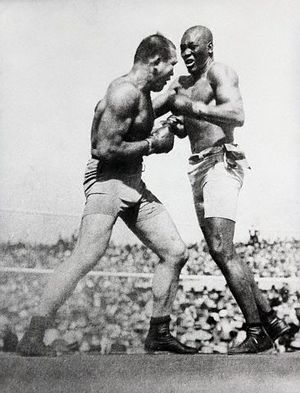
        Spanning more than 200 years, boxing has a long history
        of being the foremost fighting sport in the west


        Question 7:

        Which skills should a kungfu student develop to beat a highly skilled boxer? How to develop these skills? Which strategies would you recommend to apply in fighting Boxers?
        - Sifu Anton Schmich, Shaolin Wahnam Germany


        Answer to Question 7:


        "
        Some important skills a kungfu student should develop if he wishes to beat a highly skilled Boxer are as follows:
        1. Being relaxed and focused
        2. Ability to correctly judge a Boxer’s reach
        3. Good stance and body-movement to avoid a Boxer’s strikes
        4. Good footwork to chase after a Boxer’s retreat
        5. Adequate coverage to prevent a Boxer’s surprise counters

        Some people may be surprised at the above answers.  This is probably due to their confusing skills with techniques.


        These skills may be developed in the following ways:
        1. Practice appropriate chi kung exercises to be relaxed and focused
        2. Practice systematically with a sparring partner using appropriate techniques to develop good spacing and timing as well as body-movement
        3. Systematically practice chasing a Boxer as he retreats taking care to cover him adequately, then defeating him decisively
        4. Practice sparring with Boxers, progressing progressively from low-level Boxers to high-level Boxers


        The following strategies are invaluable:
        1. Do not hand your defeat to a Boxer
        2. Exploit his offers
        3. Create victory if he does not hand out his defeat


        The following tactics with the appropriate skills are useful:
        1. Cover and strike
        2. Cover, chase and strike
        3. Cover, fell and strike
        4. Continuous kicks
        5. Cover and chin-na


        Techniques that are useful in implementing the above strategies and tactics include the following. The pattern names are in Shaolin terms; Taijiquan practitioners may use the Taijiquan equivalents.
        1. Bow-Arrow Thread Bridge
        2. Single Tiger Emerges from Cave
        3. Wave Dragon Back to Cave
        4. Golden Leopard Speeds through Forest
        5. Fell Tree with Roots
        6. White Crane Steps on Snow
        7. White Ape Holds Branch
        8. Double Bows Tame Tiger
        9. Happy Bird Hops up Branch


        All these strategies, tactics and techniques will be taught at the “Kungfu against Other Styles” course in the Winter Camp in Janaury 2012 in Norway.

        Fighting against Boxers is also an important topic in the “Choy-Li-Fatt” course, where two other strategies and typical Choy-Li-Fatt techniques will be used.

        The two strategies are:
        1. If there is form, strike the form
        2. If there is no form, strike the shadow


        Answering an earlier question I said that for most kungfu practitioners today, kungfu would not be able to match Boxing. This is because there are so many techniques in kungfu that these practitioners do not know the most suitable techniques for this purpose, so they use typical kungfu techniques which are generally not suitable for fighting against Boxing. More significantly, they do not have systematic combat training.

        However, if we choose the most suitable techniques and skills as well as tactics and strategies, we can reverse the situation. Boxers will find it hard to match well-trained kungfu practitioners.


        During my trip to the United States recently, Anthony Spinicchia brought out the topic of kungfu classics.  I mentioned that even when one had access to the classics, he might not understand them. One reason was that important information was merely stated in the classics, but not explained.  

        The answer here provides a good example. Many people would not understand what is written above, though the writing is actually simple and straight-forward. Shaolin Wahnam students may be able to understand half of it, but those who have attended a kungfu against other martial arts course will understand clearly.
        "
        - Grandmaster Wong Kiew Kit


        Best wishes,
        Markus Kahila
        Shaolin Nordic Finland

        www.shaolin-nordic.com

        Comment


        • #49
          Hope to see many of the Shaolin Wahnam family soon.

          Best regards
          "From formless to form, from form to formless"

          26.08.17-28.08.17: Qi Gong Festival with 6 courses in Bern:
          Qiflow-Triple Stretch Method-12 Sinewmetamorphisis-Bone Marrow Cleansing-Zen Mind in Qi Gong

          Website: www.enerqi.ch

          Comment


          • #50
            Answer to Choy-Li-Fatt -question 10


            Grandmaster Wong performing a powerful pattern
            from the 18 Lohan Art


            Question 10:

            Would the way a Choy-Li-Fatt exponent use Eighteen Lohan Art be different from how a Mantis practitioner or Eight Immortals practitioner train Eighteen Lohan Art? If so, how??
            - Chia Hua


            Answer to Question 10:


            "
            Again, the answer can be yes or no.

            Theoretically, the answer is “No, the way a Choy-Li-Fatt exponent uses the Eighteen-Lohan Art is not different from how a Praying Mantis or a Eight Immortals practitioner trains it, because it is the same art.”

            In practice, the answer can be “Yes, they are different because the different practitioners practice different kungfu styles which can effect how the Eighteen-Lohan Art is practiced and the results they get.”


            Choy-Li-Fatt is harder than both Praying Mantis and Eight Immortals. This will affect the choice of patterns for practice. Choy-Li-Fatt practitioners may choose harder patterns like “Big Bird Spreads Wings” and “Shoot Arrows at Mystical Gate", whereas Praying Mantis and Eight Immortals practitioners may prefer softer patterns like “Lohan Worships Buddha” and “Rhinoceros Looks at Moon”.

            Even if they choose the same patterns, Choy-Li-Fatt practitioners may perform the patterns in a harder manner than Praying Mantis and Eight Immortals practitioners do. The result will then be different.


            Because of its long history, there are also different versions of the Eighteen-Lohan Art. An important cause for these different versions was practitioners of different kungfu styles emphasizing and modifying different patterns of the Art.
            "
            - Grandmaster Wong Kiew Kit


            Best wishes,
            Markus Kahila
            Shaolin Nordic Finland

            www.shaolin-nordic.com

            Comment


            • #51
              this answer is very illuminating for me. My sifu "Li Chi-Keung" before when asked about cosmos palm, he said that we practice it and that my sigung "Kong Hoi" can strike across space, he then pointed to the symbol of our school (a gourd with a hand on it) and referred to the hand on the gourd as "the magic hand". This is interesting as in my school we practice 2 exercises consecutively, first "12 reeling silks" and then "lohan hands". My sifu tells us that these two exercises together make up the 18 lohan hands. The 12 reeling silks is done softer and as chi kung, the lohan hands are performed softly too, but it's emphasis is on combat as it is obviously a fighting set. But in the 12 reeling silks, many patterns are performed only one time, and then quickly on to the next, the exception is our version of forcefull windmill from the 18 lohan hands. It is performed much longer, in a horse stance, bowstance, one-handed, two-handed, and forward and backward. I think this may be the reason that those who have trained with my sigung say he can strike across space. Very illuminating indeed! thank you so much

              *also the gourd is supposed to hold medicine, and the hand is said to have the ability to heal

              "HER-IT!"

              Comment


              • #52
                Answer to Kungfu Against Other Styles -question 8


                How would you attack or defend against a mixed martial artist?
                For a very practical answer, attend one of our Warrior Project courses with Siheng Kai Uwe Jettkandt,
                who is a champion fighter and master of many martial arts


                Question 8:

                Which strategies would you recommend to apply in fighting MMA practitioners?
                - Sifu Anton Schmick, Shaolin Wahnam Germany


                Answer to Question 8:


                "
                A good strategy is to avoid the opponent’s strength and attack his weakness. MMA practitioners are all-rounders except chin-na and dim-mark. Hence applying chin-na or dim-mark on them is recommended.  

                When you can successful apply chin-na or dim-mark on them, irrespective of their size and physical strength, you can subdue them. The victory is also elegant and is reversible.

                This strategy can be used if you are good at chin-na or dim-mark, and you are not wearing gloves. Of course, if these two conditions are not present, you would not be able to use this strategy.


                Another useful strategy is to strike the form if there is form, strike the shadow if there is no form. The advantage is that you can apply this strategy regardless of whether you wear boxing gloves or not, but your arms need to be powerful.

                When a MMA practitioner attacks you, irrespective of what attack he uses, you move a step slantingly back and strike your arms on his attacking arms or body.  

                If there is insufficient space for you to move back, you can move to his side or back, in which case you strike a leopard fist into his ribs, spine or back of his head.  If you do not wish to maim him, instead of striking his vital spot, you can fell him on his back, simultaneously apply a tiger-claw on his throat.

                If he moves back, you chase his shadow and strike your powerful arms on his body or head.


                A third useful strategy is to strike him when he is not prepared for it. When he is taking you down, for example, dislocate his neck using “Naughty Monkey Plucks Coconut”, or tear off his groin using “Monkey Steals Peaches”. 

                This will kill or maim him, which of course we would not want to do. Instead you can grip hard at his throat, using “Golden Cockerel Locks Throat” or his groin using the same monkey technique. MMA practitioners are not used to the concept of control. Hence, you must hurt him enough for him to let go of his attack, but not serious enough to kill or maim him.
                "
                - Grandmaster Wong Kiew Kit


                Best wishes,
                Markus Kahila
                Shaolin Nordic Finland

                www.shaolin-nordic.com

                Comment


                • #53
                  Dear Sigung,

                  thank you very much for your treasured answers. I will do my best to apply them in my training and teaching!

                  Kindest regards, Anton.
                  Engage and maintain joyful practice!

                  May all of you get the best benefits from what you do.

                  Anton Schmick
                  Shaolin Wahnam Germany Nord

                  shaolinwahnamchina.com
                  http://chikunghamburg.wordpress.com
                  http://shaolinwahnam-nord.de
                  http://kungfu-luebeck.de

                  Comment


                  • #54
                    Answer to Kungfu Against Other Styles -question 9


                    Hoong Hei Khoon, as portrayed by actor Jet Li in "Legend of the Red Dragon" (1994)


                    Question 9:

                    There are several stories of classical kung fu masters and even modern masters "mixing" together various styles and sets to create combinations. Examples that I can think of are the Tiger-Crane set of Hoong Ka, Choy Li Fatt's three progenitor systems, Dong Hai Chuan's Baguazhang students (who were already accomplished in other arts) and even your own experience (if my memory is correct) in adding certain hand forms to the One Finger Shooting Zen set.

                    How can a master be sure that any modifications that he makes to a particular form do not dilute or otherwise distract from the advantages that are already there in the original forms?
                    - Frederick Chu


                    Answer to Question 9:


                    "
                    A master is sure from his understanding and experience. If he is not sure, he may dilute or distract from the advantages already present in the original forms. Worse, he may cause harmful effects.

                    Let us take two examples.


                    Hoong Hei Khoon was a master of the tiger form. He understood the form well, and had much experience in using the forms effectively.  

                    His wife, Fong Wing Choon, was a master of the crane form. From his wife, Hoong Hei Khoon learned the crane form, which he also had much understanding and experience.

                    From his understanding and experience, Hoong Hei Khoon found that while his tiger form was excellent for combat, there were occasions when he could further improve his combat efficiency by adding a crane form.  

                    For example, instead of using a thrust kick as in “White Horse Presents Hoof” which was found in his tiger form, he could use an organ-seeking kick as in “White Crane flaps Wings” which needed less effort, was less conspicuous, and more deadly.

                    So he included some crane patterns into his tiger form, resulting in the famous Tiger-Crane Set. He fully understood what he was doing, and realized the pro and con of adding crane patterns to his tiger form. He also had much experience of the resulting benefits.


                    Now let us take an example of a modern kungfu master.  Although he is called a master out of respect, he has no understanding and no experience of using his kungfu form to develop internal force or for combat.  

                    When he sees other martial artists using weights and kick-boxers sparring, he is impressed. So he incorporates into his school weight lifting as a force training method and kick-boxing for sparring purposes. He may even call his art kungfu-do.

                    He does not have a deep understanding of weight-lifting and kick-boxing. For example, he does not understanding that developing big muscles in weight-lifting causes energy blockage, and that free exchange of blows in kick-boxing causes him internal injuries.

                    He also has no experience of weight-lifting and kick-boxing enriching his kungfu. He has a mistaken concept that big muscles and kick-boxing improve his combat efficiency, not knowing his combat efficiency would be much better had he known how to apply kungfu for combat, and also not realizing that weight-lifting and kick-boxing have brought him harmful effects.

                    Hence, by mixing weight-lifting and kick-boxing with kungfu, this modern master has diluted and distracted from his original kungfu form, and has actually brought harmful effects to himself and his students. Such harmful attempts to create combinations without proper understanding and experience, unfortunately, are not uncommon nowadays.
                    "
                    - Grandmaster Wong Kiew Kit


                    Best wishes,
                    Markus Kahila
                    Shaolin Nordic Finland

                    www.shaolin-nordic.com

                    Comment


                    • #55
                      Thank you Sigung for answering the question!

                      This sort of question has been nagging at me for some time, especially in terms of force training methods. I recently asked Sifu about training the eight Baguazhang Palm Postures as zhan zhuang, and he recommended that I respect all of my sifu's and Sigung by training what I'd been taught instead of reaching out for those things I hadn't actually been taught, and besides, the force developed by our methods can be used for all manner of different purposes; no need to worry about Bagua force or Shaolin force, just develop force. That mental hurdle overcome, I've more thoroughly enjoyed my training ever since, and this answer even moreso confirms the right path!
                      I like making silly videos (including kung fu ones!) every so often on YouTube and taking pictures of weird things on Instagram.

                      Comment


                      • #56
                        Answer to Kungfu Against Other Styles -question 10

                        Dear family and visitors,


                        This answer concludes Grandmaster Wong's ten answers in the "Kungfu Against Other Styles" -series.

                        However, as you know, Christmas is a time for gifts…


                        Many consider Grandmaster Wong's courses
                        ridiculously cheap compared to the benefits


                        Question 10:

                        Your courses like Shaolin against other Martial Arts get more and more amazing though they cover many basic techniques! It is simply mind blowing that whenever I think “Oh yes I know that”. it turns out to be a big surprise.

                        Why is that I keep on being amazed, amused and blown away even when taking so called basic courses?
                        - Sifu Roland Mastel


                        Answer to Question 10:


                        "
                        The main reason is that I keep improving both the contents and skills of my teaching. Another reason is that these new courses are devised to meet expedient needs. The third reason is that due to my wide understanding and experience, I am able to choose the most suitable material and teach it in a most effective way for the purpose in question.


                        For example, there is at present an expedient need for students to handle Boxing and Kick-Boxing because irrespective of what martial arts they practice, most martial artists today spar like Boxers and Kick-Boxers. Hence, I have devised two new courses, Shaolin and Taijiquan against other martial arts.

                        Both the techniques and skills in these two new courses are very basic. In fact, they are of a lower level than the techniques and skills taught in the basic Shaolin 16 combat sequences and the Taijiquan 12 combat sequences.  


                        However, because of my wide understanding and experience in combat application, I know that what students need are not advanced skills and techniques, but confidence and experience in meeting opponents who use a fighting art very different from what they have been accustomed to. In fact, if the skills and techniques are too sophisticated, they may become a hindrance instead of an aid. Therefore I choose more simple skills and techniques, which are more effective.


                        I also teach these skills and techniques systematically and progressively, paying more attention to skills than to techniques, as it is actually skills that students need when fighting against Boxers and Kick-Boxers. As the techniques used by Boxers and Kick-Boxers are simple, relatively simple kungfu techniques are sufficient to handle them if our students have good skills. Indeed, sophisticated techniques would slow down the acquiring of these skills.

                        Although the skills and techniques are simple, there is much profundity in their application. For example, a small difference between using “Bow-Arrow Thread Bridge” for blocking or for threading can bring a big difference in result. If you use it for blocking, as many initiated practitioners would do, you expose yourself to a Boxer’s punches. If you use it for threading, you hit a Boxer as he launches forward to strike you.


                        The teaching is systematic. First, students learn to keep a Boxer at bay. Next, they deflects, not blocks, his strikes. Then they cover him adequately. Only when students have ensured they are safe, they counter-attack the Boxer.

                        The teaching is also progressive. First, students practice at low speed and with little force. Next, they practice at normal speed and with normal force. Then they practice at high speed and with much force.  In their counter-attack, the progress gradually from striking to felling, to chin-na and to kicking. With systematic and progressive training, students can benefit in an hour what others may not obtain in many months of random and haphazard premature free sparring.


                        So, although you are an advanced practitioner, you may still be amazed, amused and blown away by such a basic course. You are amazed, for example, by the effectiveness of the systematic and progressive teaching methodology; you are amused by the fact that such simple skills and techniques can produce better results than sophisticated skills and techniques, and you are blown away by the transformation of students in such a short time from a position of uncertainty and nervousness to a position of confidence and efficiency when facing Boxers and Kick-Boxers."
                        - Grandmaster Wong Kiew Kit


                        Best wishes,
                        Markus Kahila
                        Shaolin Nordic Finland

                        www.shaolin-nordic.com

                        Comment


                        • #57
                          Very cool!

                          /salute
                          Shaolin Wahnam USA

                          "Every morning you are born again. What you do today is the most important thing".

                          Comment


                          • #58
                            I'm really enjoying reading this thread. Many thanks
                            from the ♥

                            Comment


                            • #59
                              Answer to Choy-Li-Fatt -question 11

                              Dear family and visitors,


                              Merry Christmas!!!


                              At the last "final" installment, I hinted there might be some presents this Christmas.


                              Well, here you go - at least five more answers to your questions, already handpicked and done - courtesy of Grandmaster Wong.


                              There is also a good chance we'll have something truly wonderful on the way for Winter Camp. We're ironing out some kinks, but if everything goes as planned, in a few days you'll be amazed…


                              But first, let's start with Choy-Li-Fatt. Enjoy!


                              Combat application of Da Lohan Quan


                              Question 11:

                              Is Choy Li Fatt related to Great Northern styles like Da Lohan, Tan Tui or First Emperors Long Fist?
                              - Sifu Roland Mastel


                              Answer to Question 11:


                              "
                              The answer, as is common in our school, is “yes” and “no”, depending on one’s interpretation.

                              If we interpret the relationship historically and over a fairly long period, yes Choy-Li-Fatt is related to the great Northern Shaolin styles like Da Lohan, Tan Tui and First Emperor Long Fist.

                              Southern Shaolin Kungfu, the style of Shaolin Kungfu practiced at and issued from the Southern Shaolin Temple, evolved from these Northern Shaolin styles. Some of the patterns of these northern styles, like the upward swinging arm of Da Lohan, the chopping fist of Tan Tui, and the long-reaching thrust punch of First Emperor Long Fist, are also found in Choy-Li-Fatt.

                              But if we interpret the relationship over a shorter period, with emphasis on their present forms rather than their origins, the answer is no. Choy-Li-Fatt is related to Southern Shaolin styles, and not Northern Shaolin styles. It is evolved from Choy Ka Kungfu, Li Ka Kungfu and Southern Lohan Kungfu, Although some Choy-Li-Fatt has some patterns similar to those of the Northern Shaolin styles, on the whole Choy-Li-Fatt patterns are characteristically different.  

                              As an interesting analogy, we may consider Choy Ka Kungfu, Li Ka Kungfu and Southern Lohan as brothers of Choy-Li-Fatt, and other Southern Shaolin styles like Hoong Ka and Wing Choon as cousins. On the other hand, Da Lohan (or Big Lohan from Northern Lohan), Tan Tui and First Emperor Long fist as distant relatives.  
                              "
                              - Grandmaster Wong Kiew Kit


                              Best wishes,
                              Markus Kahila
                              Shaolin Nordic Finland

                              www.shaolin-nordic.com

                              Comment


                              • #60
                                Answer to Choy-Li-Fatt -question 12

                                Dear family and visitors,


                                Here's another gift chapter for the holidays


                                Question 12:

                                Often Choy-Lee-Futt may be regarded as a style which is more dominantly trained by practitioners of Christian religion, yet many Kung Fu practitioners may regard rightly or wrongly Choy-Lee-Futt as a Christian style.  Could you please give us some insights of your point of view on that?
                                - Sifu Roland Mastel


                                Answer to Question 12:


                                "
                                While it is true that many Choy-Li-Fatt practitioners are Christian, it is not true that Choy-Li-Fatt is a Christian style.

                                Like all other styles of kungfu and chi kung, Choy-Li-Fatt is non-religious. There is no mention of any religious dogmas in Choy-Li-Fatt. It can be practiced by people of any religion without affecting his religious belief.

                                There is an interesting parallel in our school. Because I have been teaching our arts in the West, I believe there are more Christian now in Shaolin Wahanm than Buddhist, Taoist, Muslim, Hindu or any other religion. But our arts remain non-religious. And we are proud that, to quote Lee Wee Joo, not only we tolerate other religions we actually celebrate with them.

                                The reason why many Christians practice Choy-Li-Fatt is due to historical co-incidence, and not due to religion. The founder of the Chinese Republic, Dr Sun Yat Sen, was Christian.  Many Choy-Li-Fatt practitioners supported Dr Sun Yat Sen in his revolution to overthrow the Ching Dynasty. Many Choy-Li-Fatt masters also became Christian.
                                "
                                - Grandmaster Wong Kiew Kit


                                Best wishes,
                                Markus Kahila
                                Shaolin Nordic Finland

                                www.shaolin-nordic.com

                                Comment

                                Working...
                                X